Build software for your trade, on your terms.
For all residential, commercial, and construction trades.
Electrical
Dalton Mills gives electrical contractors a fully configured AI platform and the ability to extend it with the tools, agents, and workflows specific to how their operation runs.
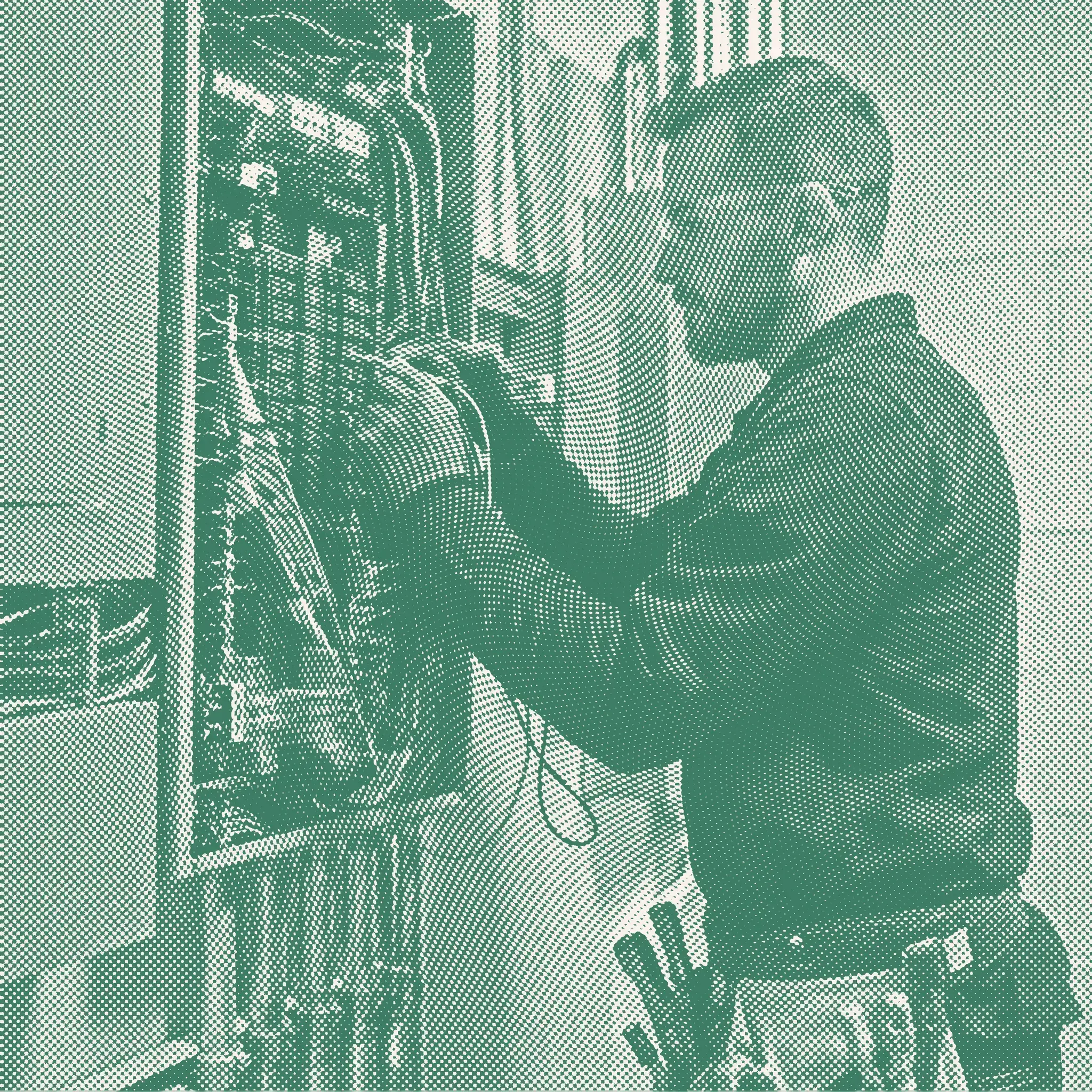
For all residential, commercial, and construction trades.
Give customers a clearer way to review quotes and say yes faster.
Schedule crews, route trucks, and handle the last minute reshuffle the way your business actually runs.
Make ongoing service easier to manage, renew, and keep organized.
Customize pricing around the details that affect each job in your field.
Create a customer portal and CRM that makes your business easier to work with.
Turn work details into clean reports that do not leave room for confusion.
…and whatever else your work calls for!
Electrical contractors manage work that spans residential panel upgrades, commercial fit-outs, industrial installations, and everything between. No two jobs price the same. No two customers communicate the same. And no off-the-shelf platform was built with any of that in mind.
AI for electrical businesses is most useful when it is configured around the way electrical work actually runs: permit workflows, load calculations, inspector-ready documentation, and the way crews move from rough-in to trim-out.
Dalton Mills gives electrical contractors a fully configured AI platform and the ability to extend it with the tools, agents, and workflows specific to how their operation runs.
The most useful AI tools for electrical contractors are purpose-built workflows that reflect the actual decisions electrical contractors make every day.
Dalton Mills makes it possible to build those tools without starting from scratch. The AI layer handles the reasoning and configuration. The electrical contractor brings the operational knowledge. The result is a platform that works the way an electrical business actually works.
Most electrical contractors get their work from two places: emergency calls and word of mouth. AI for electrical businesses can help break that pattern.
Speed to lead is where most electrical contractors quietly lose work they never knew they had. When someone submits a request online, fills out a contact form, or calls after hours, the first contractor who responds usually gets the job.
Dalton Mills automates that first response before a competitor picks up the phone. Most electrical businesses are not losing those leads on price. They are losing them on response time.
Commercial electrical contractors grow differently. Their customers are property managers, general contractors, facility directors, and developers – people who hand out work in volume if they trust you and go quiet if you drop a ball.
Dalton Mills keeps every touchpoint in those relationships organized: who you last talked to, what was quoted, what is pending, when the next scheduled maintenance visit is due. The contractors who win repeat commercial work are not always the ones with the lowest number. They are the ones who are easiest to work with and never let anything fall through the cracks.
The electrical companies that grow consistently are the ones that treat every customer, residential or commercial, as the start of a long relationship rather than a one-time job. AI for electrical contractors makes it practical to operate that way at scale, without adding headcount to do it.
Dispatching in electrical is not just a scheduling problem. It is a compliance problem. You cannot send an apprentice to pull a permit. You cannot put two apprentices on a job site without a journeyman present, and in some states the ratio changes depending on whether the work is residential or commercial.
Generic dispatch software does not know any of this. It books whoever is available.
Dalton Mills lets electrical contractors build crew management workflows around the actual rules their operation has to follow. Every technician profile carries their license class, their state certifications, their OSHA documentation, and their arc flash training status. Under NFPA 70E, arc flash retraining is required every three years, and if that training is not documented it legally did not happen. A worker whose certification has lapsed, dispatched to a high-voltage panel by a foreman who assumed someone else checked, is a liability the spreadsheet did not flag.
Dalton Mills makes it possible to build workflows that flag those gaps before dispatch rather than after an incident. The field crew management problem in electrical is different from every other trade, and AI for electrical contractors needs to reflect that.
Electrical estimating has a problem that most other trades do not. The primary material in the job, copper wire, is a commodity that trades on global markets and moves in ways that have nothing to do with your backlog or your customer relationships.
Dalton Mills lets electrical contractors build estimating workflows that price labor by license tier, since a master electrician running a service call costs differently than an apprentice under supervision on a new construction rough-in, and that factor quotes in material cost protection language automatically rather than as an afterthought.
A contractor doing commercial work across a six-month project timeline should not be carrying copper price risk in a lump-sum contract. The tools to protect against that exist. Dalton Mills makes it possible to build them into every quote instead of relying on whoever on your team remembered to add the clause this time.
The NEC is updated on a three-year cycle. The 2026 edition is published and states are moving through adoption at different speeds. Eight states have already adopted it. Many major jurisdictions are still on 2023 or 2020.
Some cities, Chicago and New York among them, enforce their own local codes that differ from the statewide version. An electrical contractor pulling permits across two or three jurisdictions can be working under three different code editions at the same time, and the edition in effect determines what gets installed, what gets inspected, and what gets rejected.
On top of code compliance, electrical contractors manage license renewals, continuing education requirements, and the administrative reality that a license that is valid in one state may not be recognized in the next.
Roughly one third of states offer reciprocity for journeyman and master licenses, but the specifics are different everywhere and the rules change. A growing electrical business expanding into a new market has to track which licenses transfer, which do not, and which crew members need to sit for a new exam before they can work legally.
Dalton Mills gives electrical contractors the ability to build compliance tracking into how their operation actually runs, rather than managing it in a spreadsheet that nobody checks until something goes wrong.
License expiration dates, CEU deadlines, jurisdiction-specific code requirements, permit authority by crew member, all of it visible and actionable before it becomes a problem. AI for electrical businesses is most useful when it surfaces the compliance issue before the inspector does.
Kickstart your business with Dalton Mills.



.avif)