Intro: BIM software models are indispensable in the pipefitting industry, but they’re not exhaustive. AI can fill the gaps by providing additional tools to help with better operational management and improved financial planning and business scaling.
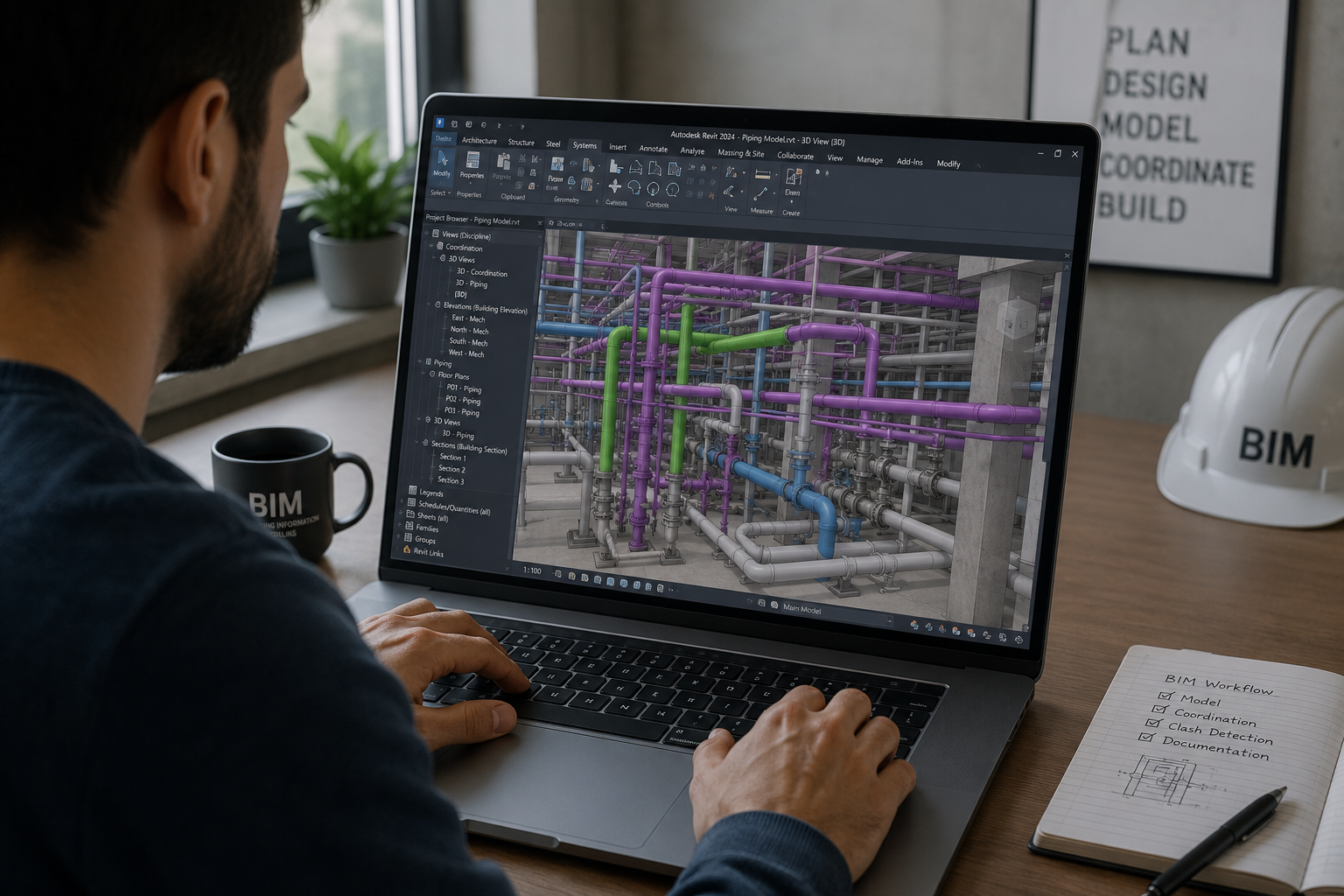
Pipefitting relies on the Building Information Modeling (BIM) more heavily than other crafts due to the job’s low margin of error and the many moving parts involved.
A standard BIM model can contain information about things like materials, schedules, costs, equipment specs, installation sequences, and dimensions, which are vital for such a complex and technically-heavy job as pipefitting.
However, despite being necessary and useful, BIM software models are not exactly user-friendly. They’re very technically demanding and require time and sustained effort to understand how to use them properly.
More importantly, BIM models rely heavily on manual input, routing, and updating, which, again, is time-consuming and leaves room for human error.
AI eliminates these problems by automating most of these processes, vastly reducing the error margin, and saving you time and money at the same time.
And that’s not all AI models can do.
The Problems AI Solves for Pipefitting Businesses
Thanks to their adaptability, ease of use, and flexibility, AI systems can address two primary areas of concern within the pipefitting business:
Improve Software-Based Planning and Execution
This primarily addresses the planning and execution side of things, which includes aspects like pathing, routing optimization, material usage, and predictive maintenance.
Specialized AI systems can fill all of the blind spots that most BIM models fail to cover effectively, including:
Clash detection – Pipefitting is a game of inches and efficiency and, while BIM models are good at identifying collisions, they can’t resolve them on their own; that’s the operator’s job. AI systems go beyond problem detection and even propose solutions, reroute systems, and accurately predict interactions, allowing you to see the problems before they occur.
Job-specific estimates – AI models can estimate variables like pipe length, weld counts and placement, spool segmentation and fabrication sequencing for prefab sections, and the hours necessary for the job. This reduces material waste, improves on-site effectiveness, and lowers job duration.
Predictive maintenance – AI is good at estimating system failures based on data like operating conditions, inspection history, and real-time sensor data. This allows for more effective predictive maintenance, which translates to improved system health long term.
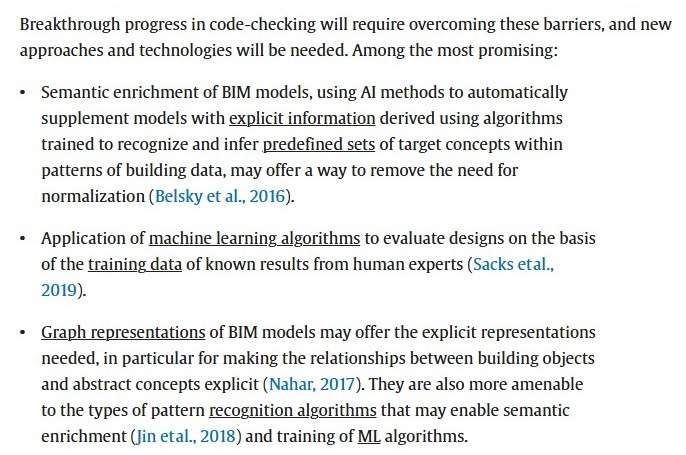
Important note here: Rather than replacing BIM software, AI models are meant to complement it (at least for now) and the trend is visible. This 2020 study by ScienceDirect had already identified the need for a merger between BIM models and AI tools in the construction ecosystem.
But, aside from the on-site operational support, AI tools can also impact your business’s functioning and development directly. This brings us to the next point.
Improve Business Operations
The pipefitting industry is prone to the same problems that plague similar fields of work, like plumbing, HVAC services, constructions, landscaping, and water treatment.
In 2026, you can use AI to:
Automate Customer Support
Bad customer support is the second most effective driver of negative reviews, right behind the poor quality of work. Missed complaints, missed schedules, and poor follow-up calls and emails can quickly deteriorate your reputation.
AI can answer emails and calls, schedule jobs, take complaints, answer customer questions, and redirect customers to human operators, among other things. The result is visibly reduced workload within the customer support department and improved customer relationships.
Alleviate Paperwork Clutter
Paperwork clutter is the primary reason behind administrative overload, which can impact your business’s functioning.
AI allows you to automate invoices, generate reports and quotes, estimate costs, and track billing progress. This not only takes some of the pressure from the administrative department, but also eliminates the risk of paperwork errors.
Optimize Finances
The pipefitting industry consists of many moving parts, which leaves room for a lot of problems within the financial department. Poor cost management, delayed payments, underpriced or overpriced services – all can impact your business negatively.
A good AI system can optimize material costs and estimate job complexity and duration to produce a fair service pricing. This helps you cut costs and increase your business’s revenue at the same time.
This is supported by this 2025 study by Cornell University, which states that AI is helping Small and Medium-sized Enterprises (SMEs) cut operational costs by up to 30%. 95% of SMEs also report direct revenue boats linked to their AI usage.
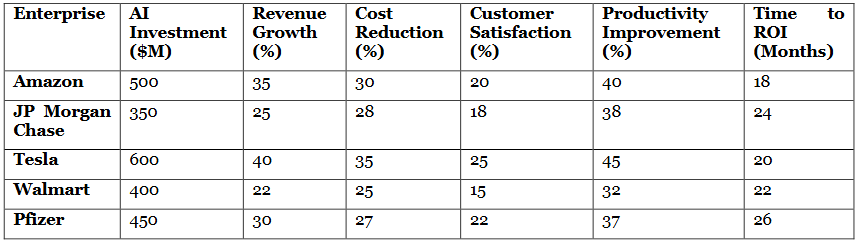
Giants like Tesla, Walmart, JP Morgan Chase, and Amazon have also reported between 25% and 40% revenue growth following their AI integration efforts.
This means that AI adoption is beneficial across all business sizes and ecosystems.
[CTA_INSERT]
Help with Business Expansion
AI can help your business scale more effectively as a direct consequence of cutting costs, boosting operational productivity, and improving the customer support.
When combined with a good BIM model, AI tools can vastly improve on-site operations and aid with cross-discipline coordination (pipefitting overlaps across industries like electrical, HVAC, structural work, and plumbing).
More importantly, as we’ve seen, you can outsource some activities to AI tools entirely, like customer support, paperwork management, and financial planning.
This brings us to the next important point: which AI tools should you use exactly?
Which AI Model to Use for Pipefitting?
The answer is that there is no specific AI tool or model that would address all of your problems at once. Pipefitting is very complex in nature and, as we’ve seen, spills into other disciplines as well.
One solution would be to outsource your needs to several AI models, like generative AI, AI agents, optimization and predictive AI, each with their own specialization. Good strategy if you want structured and gradual AI integration, but a bad one if you want simplicity and effectiveness.
Another solution would be to rely on platforms like Dalton Mills, which combine multiple AI tools to address all of your problems in bulk.
The immediate benefit is obvious: use just one service to solve multiple problems at once. But the pros go beyond that.
How Dalton Mills Uses AI to Help Pipefitting Businesses
Dalton Mills is an AI-powered platform that relies on several AI models to address multiple pain points within the pipefitting industry – all in one place.
These include invoice automation, financial optimization (cost and price estimates for materials and services), customer support, and operational efficiency increase (track scheduling, optimize routing and material use, track job progress, etc.).
More importantly, Dalton Mills is highly customizable, meaning you can adapt the software to your business’s specific needs. Only you know what your business requires and how it operates; we offer you the tool to make everything work in unison.
And because accessibility often makes or breaks a user’s experience with a tool like this, we made Dalton Mills easy to use and intuitive. You don’t need to know coding or possess any advanced tech knowledge to operate our platform.
If you’re thinking about incorporating AI into your daily operations, apply for early access here and you get to test our Dalton Mills tools before anyone else.
Build the platform your home service business runs on.
Dalton Mills is the AI operating system for commercialand residential trades.
The landscaping industry is growing, but businesses still face scalability issues, poor cashflow, offseason stagnation, and so on. Modern AI platforms promise to solve all these problems.

.avif)