July 12, 2026
How Custom Home Builders Can Use AI to Handle Subcontractor Delays
Custom home building is a trade that has just as many problems as it has services.
Custom home building is a trade that has just as many problems as it has services. By far the most prevalent issue relates to subcontractor delays and no-shows.
The problem is made worse by the fact that the contractor often needs to work with multiple different contractors at any given point. These include HVAC professionals, excavators, roofers, plumbers, and electricians, each with their own specializations, work routines, and schedules.
With so many different providers, problems are inevitable. From no-shows to constant rescheduling, job overlapping, and quitting projects midway through, there’s no shortage of things that can go wrong.

Standard CRM tools are good at organizing work and schedule tasks, but can’t adapt to or predict problems like AI can.
The AI Solution to Subcontractor Drama
AI’s biggest advantage is its adaptability, making it a great alternative to standard, inflexible CRM tools, which businesses typically use to manage their operations. Contractors can now use AI to create custom software tools designed specifically for managing subcontractor-related activities.
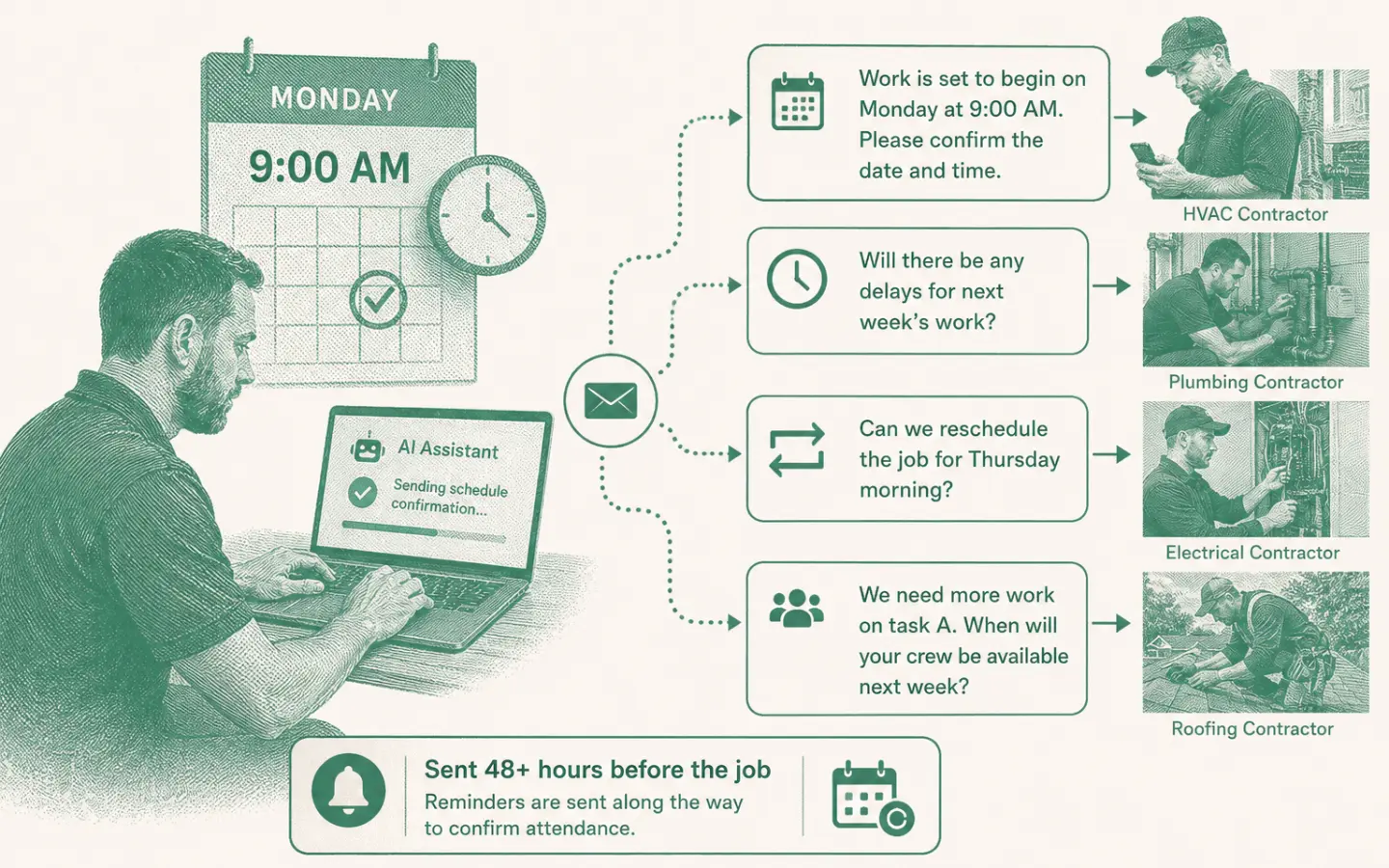
Imagine an AI assistant that automatically confirms the schedule or job details by sending subcontractors questions like:
“Work is set to begin on Monday at 9:00 AM. Please confirm the date and time.”
“Will there be any delays for next week’s work?”
“Can we reschedule the job for Thursday morning?”
“We need more work on task A. When will your crew be available next week?”
The assistant can send these questions 48 hours or more before the actual work, along with reminders along the way to confirm attendance. This gives contractors sufficient time to reorient themselves in case of any potential delays.
You could also build a software that tracks chain tasks, where delays in one area will put other tasks on hold. The software can calculate the delay window for all the tasks involved in the chain, notify subcontractors ahead of time, and help with rescheduling.
CRM tools are essentially passive record-keeping software, while custom-built AI software are more proactive. Contractors can use them to automate subcontractor coordination and plan their operations ahead of time. This prevents the cascading issues resulting from delays and rescheduling.
[CTA_INSERT]
Is AI Better for Custom Home Builders Than Standard CRM Tools?
AI is better than most CRM tools in a lot of areas and blue-collar contractors have started to realize exactly this over the last year. According to a study by Home Innovation Research Labs, AI adoption in the construction sector is on the rise and fast.
In 2024, only about 20% of builders were using AI in their operations, up to 32% in 2025. Most common uses were in design and planning, marketing, sales, and project management, with emerging uses in predictive maintenance and the financial department.
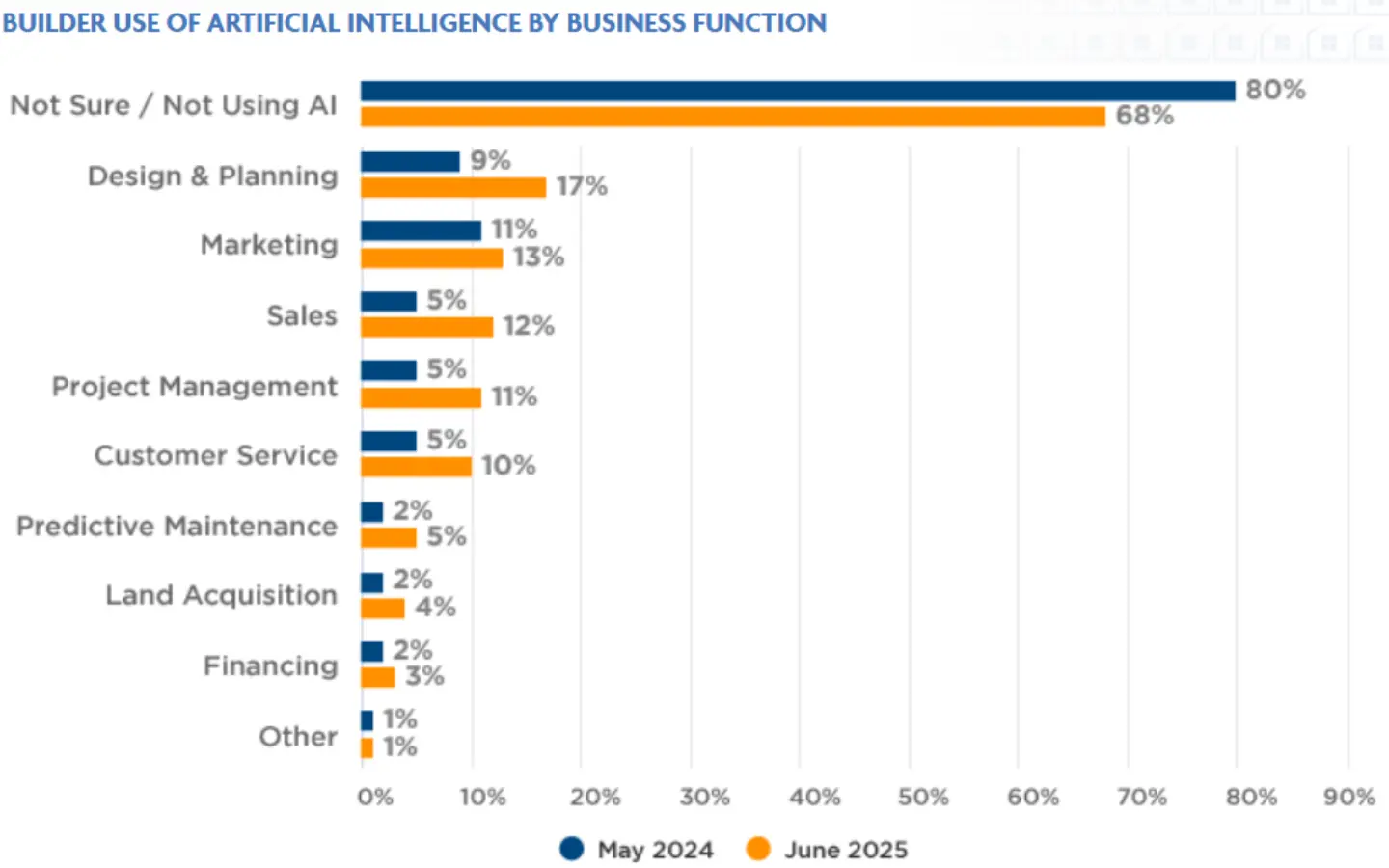
Despite the growing trend, the adoption rate is still low, which is more linked to the contractors’ distrust in the new AI tech, rather than to AI being ineffective.
Josh Waldrep, a master plumber who’s using AI to automate his business’s paperwork, among other things, has noticed the same thing. In his own words, he hasn’t yet met any other plumbing professional using AI to automate business operations.
While standard CRM tools and field service software remain the norm in 2026, AI is catching up fast as more contractors realize the potential and flexibility of custom-made software.
How Home Builders Can Use Dalton Mills to Manage the Subcontractor Hell
Dalton Mills is an AI-powered platform that takes the power from software companies and puts it into the hands of contractors.
The standard so far has been businesses trying to fit their operations into the software tools, when it should be the other way around. CRM tools and field service software should adapt to the business’s needs instead.
Until that happens, Dalton Mills offers a solution today: custom-built CRM software, designed by the contractors themselves to fit their specific operational needs. Businesses no longer need to wait for software companies to finally create the tool that meets their specific goals; with Dalton Mills, they can build it themselves.
There’s no coding necessary, since AI will be handling all the software engineering. As a contractor, all you need is the operational knowledge and understanding of how your business functions and what it needs. The AI will handle the rest.
Dalton Mills is built with accessibility in mind, designed specifically for blue-collar contractors who value their time and need results fast. This means that creating your own custom-built software is as easy as telling the AI what you need.
If you want to try out Dalton Mills, go to the official website and apply for early access today.
Build the tools your trade needs.
Dalton Mills gives people in the trades the opportunity to create custom workflows and software tools without any prior technical experience.
Apply For Early AccessRead next
How Much to Charge for Roofing Jobs in 2026
Industry data today shows that the average roofing business racks in a net profit of around 2.8%, which means around half of them are making less than that.
October 6, 2026
How Google Ads Work for Plumbing Businesses
Plumbers can and should use a variety of marketing strategies to increase their clientele and gain more market visibility.
October 5, 2026

How to Price Window Cleaning Services in 2026
A piece of industry data shows that around 64% of window cleaning services earn under $100K annually.
October 4, 2026