May 18, 2026
AI Use Cases for Pest Control Companies
AI can run the scheduling and routing you didn't get into pest control to do.
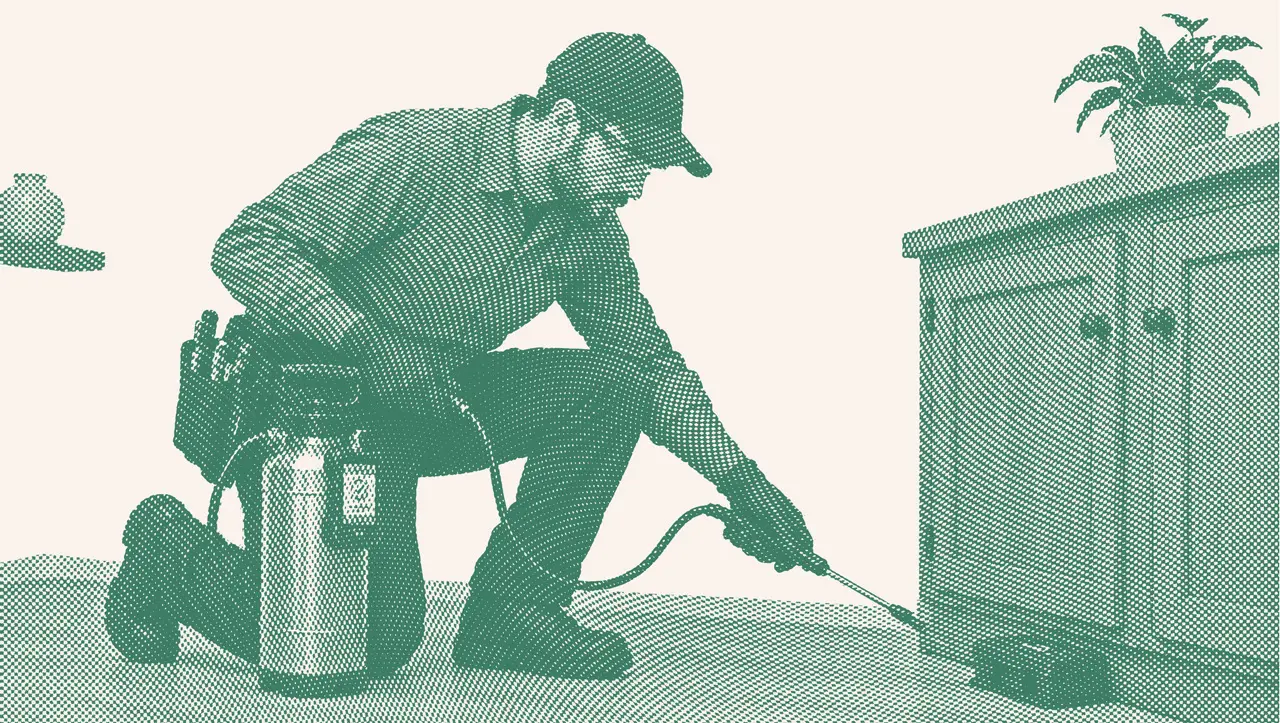
You didn't get into the pest control business to spend your mornings wrestling with a calendar or chasing truck routes on a map.
Yet, between mapping out daily stops, and answering frantic calls about german cockroaches you probably spend more time on office work than you do managing your crew.
You might have heard that AI software can solve these scheduling headaches, but if you aren't a "tech person," it’s hard to see how a computer program helps your team on the ground when they are crawling under foundations or treating rooflines.
To make sense of it, you have to look past the technical hype.
This technology isn’t a mechanical brain designed to take over your company or replace the tracking skills your technicians use. It is simply an automated tool that reads information and spots patterns at a speed no human can match.
When you use it correctly, it acts like an incredibly efficient office manager, handling the repetitive data tracking so your trucks run on time and your daily schedules stay tightly packed.
Why Should You Care About AI in Pest Control?
The biggest daily drain on profit isn't really the cost of chemical concentrates, it can also be the time your trucks spend driving empty.
When a schedule gets chaotic, it turns into what operators call a "star route", where a technician bounces all over the county, criss-crossing the same highways repeatedly.
This constant backtracking wastes expensive fuel, burns out your drivers, and forces you to miss out on the dense, neighborhood revenue that comes from hitting multiple quarterly perimeter sprays on the same street.
Even when your office staff does their absolute best, this chaotic routing naturally builds tension between the office and your field technicians. Your schedulers are left stressed by complex logistics and disgruntled clients, while your techs are pushed to their limits trying to rush between stubborn bedbug or flea jobs.
This is exactly where an automated system saves your day.
How Can You Use AI to Speed Up Your Office Work?

Putting this technology to work in your shop doesn't mean you have to learn how to write code. You can start small by letting it handle three practical tasks in your daily routine:
- Predicting your seasonal pest surges:
Pest outbreaks follow the weather and the calendar. The software can automatically scan your past job history to flag exactly when specific neighborhoods are about to get hit with subterranean termites, mosquitoes, or overwintering rodents. This lets you send targeted service reminders to your regular clients before the bugs show up, locking in your seasonal contract renewals early.
- Cleaning up technician field notes:
Your technicians need to focus on treating the perimeter and inspecting bait stations, not typing long descriptions on a tiny screen with chemical-resistant gloves on. They can simply dictate a few quick sentences into their phone about the active infestation levels, chemical mixing ratios used, and structural entry points found, and the software will format those rough notes into a clean, professional summary that goes right onto the customer’s invoice.
- Assigning jobs based on specific licenses:
If a complex commercial food-handling account or a heavy termite baiting job requires a technician with a specific structural pest category license, the system reads the incoming ticket and automatically assigns it to the right person on your crew, catching scheduling errors before the truck ever leaves the warehouse.
[CTA_INSERT]
What Are the Risks of Mismanaged Scheduling?
When your office tracking relies on messy data or rigid software, your field crew pays the price.
A technician narrated how he knocked out 14 tight stops by 3:00 PM, only to find a 15th appointment tacked onto the very end of his route. This final job required a 40-minute drive away from his home and carried a late 5:00 PM to 7:00 PM arrival window.
Hoping to get home early, he drove out, called the client, and arrived ahead of schedule. He ended up waiting outside in the driveway for two hours just to perform a routine, preventive treatment. Then, right as 5:00 PM hit, the homeowner cancelled the service because they weren't going to make it back.
That kind of wasted day completely destroys your crew's morale.
A bad setup can also accidentally create unfair pay and production gaps among your workers. Experienced, thorough technicians quickly become resentful when a poorly managed schedule sends them all over the place to far-away stops with zero density, while a few newer techs make three times more money simply because they were handed tightly packed routes where the jobs are right next to each other.
To protect your business from high turnover and keep your best techs from looking for a new career, your scheduling system needs to distribute stops fairly and logically based on real data, rather than leaving it to chance.
How Can You Build a Better Foundation for Your Work?
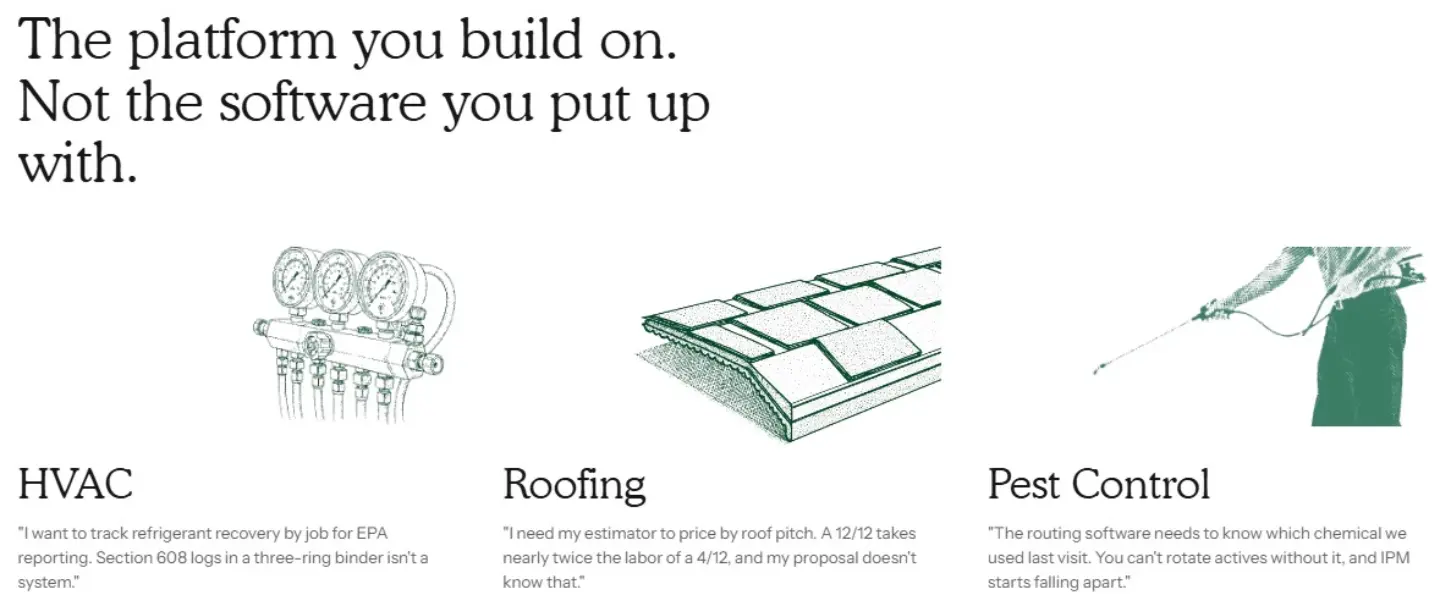
Most traditional software you use daily expects you to adapt to it. But the unique way you handle your accounts, log your chemical usage, and treat properties is exactly why your clients choose you over the big national brands.
Instead of fighting an off-the-shelf program, you need a system that handles the basic plumbing like keeping your customer list secure and tracking your invoices—while giving you full control over how your daily workflow moves.
Dalton Mills was built to give you that flexible software foundation.
It provides the core data infrastructure you need, but lets you build the custom steps and automated features that match how your crew actually operates on the ground.
By owning the foundation, you ensure your technology serves your business rules instead of trying to rewrite them.
It's time to stop fighting with rigid software and start building the tools your business actually needs. Apply for early access to Dalton Mills today.
Build the tools your trade needs.
Dalton Mills gives people in the trades the opportunity to create custom workflows and software tools without any prior technical experience.
Apply For Early AccessRead next

How Much to Charge for Roofing Jobs in 2026
Industry data today shows that the average roofing business racks in a net profit of around 2.8%, which means around half of them are making less than that.
October 6, 2026
How Google Ads Work for Plumbing Businesses
Plumbers can and should use a variety of marketing strategies to increase their clientele and gain more market visibility.
October 5, 2026

How to Price Window Cleaning Services in 2026
A piece of industry data shows that around 64% of window cleaning services earn under $100K annually.
October 4, 2026