June 30, 2026
Blue Collar Builders Episode 9: Restoration Company CEO Builds His Own Multi-Functional Software with No Coding Experience
Todd Saunders, co-founder of Dalton Mills, meets Justin Donate, CEO of True North Restoration, to discuss how Justin went from carpet cleaning to owning 25 restoration locations and franchises and planning to expand to over 80 within the next year.
Todd Saunders, co-founder of Dalton Mills, meets Justin Donate, CEO of True North Restoration, to discuss how Justin went from carpet cleaning to owning 25 restoration locations and franchises and planning to expand to over 80 within the next year.
They also talk about the many softwares Justin was using to manage his operations and how he eventually built his own model to replace 11 redundant tools.
From Carpet Cleaning to Multi-State Restoration Franchises
Justin Donate kickstarted his carpet cleaning services in 2015, just two months before the massive Denver rainstorm, which opened the door to a new business opportunity: home restorations.
Over the course of 6 years, between 2015 and 2021, Justin expanded his business across state lines, opening locations in Fort Collins, Carl Springs, and Dallas. It didn’t take long for a new business opportunity to arrive in the form of franchising independent carpet cleaning companies that were also looking to transition to restoration services.
Fast-forward several years later and True North Restoration is now spread across 25 locations and plans to reach 80-to-100 or more within the 12 to 18 months.
How Justin Managed to Compress 11 Different Software Tools Into One
A multi-state business with franchises open in over two dozen locations will naturally use multiple CRM tools to manage its operations and logistics. True North Restoration was one of them. As Justin explains, he was using multiple different CRM software tools to manage different operational aspects, typically between 8 and 10. One location was up to 11.
This was what Justin called “SaaS Purgatory”, with different software models managing his CRM data, project management info, field documentation, finances, estimates, and much more.
“You never quite have a beautiful, seamless system. It’s just segregated, it’s really tough.”, Justin explains.
The idea to transition from this broken and convoluted system to a simpler one in the form of an AI-built CRM software came from experimenting with AI and testing what it could do. It didn’t take long for Justin to realize the true potential of AI in the blue-collar industry:
“Over the last 5 years, before AI was even a thing, I knew all of my pain points [...] I’ve known what we needed and it’s very difficult to know what you need and no way to get there. But, as a CEO, now I can build something way faster than talking to all these different teams of people. It’s like, it’s all within my reach. It’s amazing”.
[CTA_INSERT]
Why AI Is More Competent Than Standard Software Tools
As Justin himself noticed, running a business involves juggling several CRM and field service tools, each targeting different departments and operations. This creates a complex and confusing system which is both difficult to supervise and manage and more prone to errors and mishaps.
Justin started using AI to not only centralize all these systems, but also to create new use cases, specific to his internal operational needs. One of these applications involved scanning the layout of the room and rendering it in 2D graphics for easier restoration planning. Or putting it in 3D to create 360 photo tours for a more realistic viewing.
Another useful use case came in the logistic department, with the software keeping clean tabs on elements like projects, crew dispatching, financials, time tracking, location photos, and field visits.
These simple, yet impactful new use cases expose the true weakness of standard CRM models today: the lack of customizability.
CRM software today is tailored to different trades, but not different businesses. But different businesses have different needs and herein lies the problem. A problem which Justin solved by thinking outside the box and building his own CRM software tool, rather than waiting for current CRM models to catch up.
More importantly, he did it while having zero coding experience. Which, as he explains, is no longer a problem in 2026’s AI ecosystem:
“Historically, for basically thousands of years, knowledge has been very costly. [...] With AI, it levels the playing field. Knowledge is basically free. So, I think it’s easy for someone like myself or someone else on your podcast to be like ‘You know I vibe-coded this in my basement, in my pajamas, anyone can do it.”
How Dalton Mills Fills the Gap Standard CRM and Field Service Tools Can’t
As an AI-powered platform, Dalton Mills addresses two of the biggest problems associated with the CRM software market: the lack of true customizability and the difficulty of hard-coding your own tools.
Todd described the first problem during his talk with Justin, when he said:
“[...] I talk to a lot of people who have the same feeling: ‘Uh, too many softwares, it doesn’t really work for me, it’s not malleable, I have to fit my business around the software, but it doesn’t do what I want it to do.”
Dalton Mills addresses this problem by allowing contractors to build their own CRM software models instead. Fully customized pieces of software that they can use to address pain points that are sometimes unique to their businesses.
More importantly, they can do it without any coding experience, which addresses the second problem.
With Dalton Mills, the AI handles all the coding, which drastically reduces the skill gap necessary to build a piece of software from scratch; essentially anybody can do today what once required advanced coding experience and software engineering abilities.
If you’re unsatisfied with your current CRM software tools, apply for early access with Dalton Mills and start building your own CRM software instead.
Build the tools your trade needs.
Dalton Mills gives people in the trades the opportunity to create custom workflows and software tools without any prior technical experience.
Apply for early accessWatch next
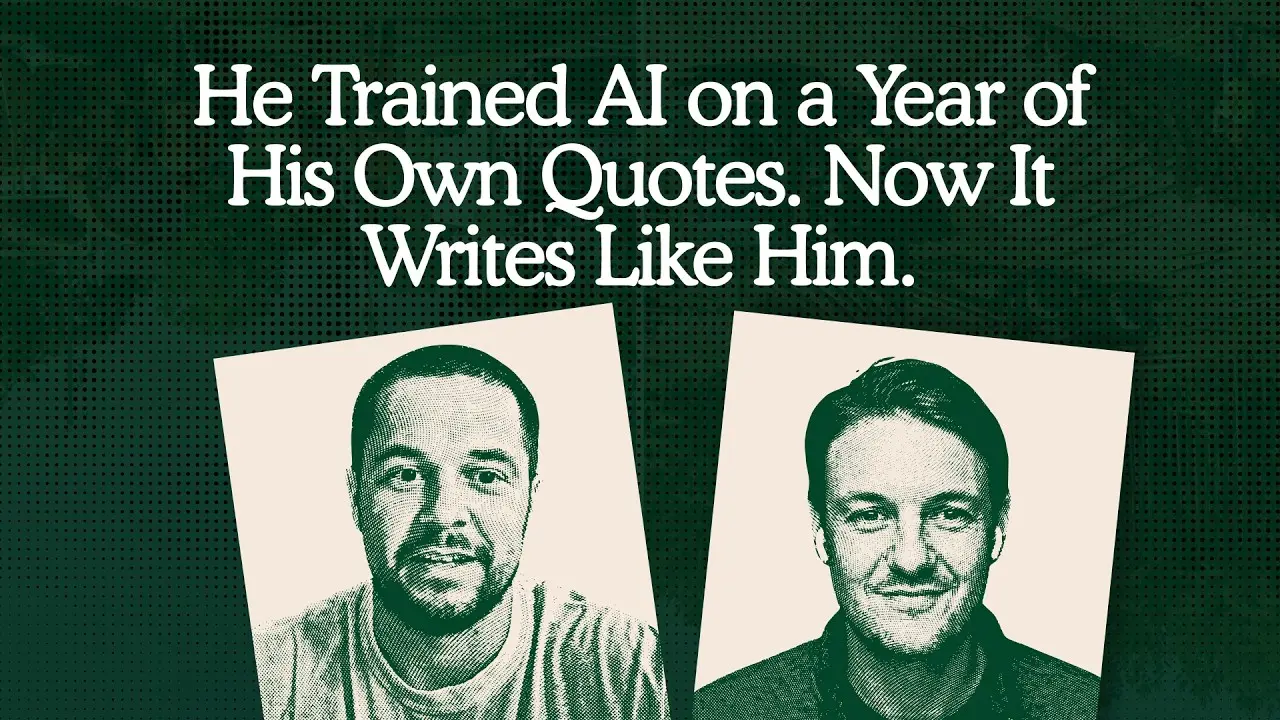
Today’s episode of Blue Collar Builders welcomes Todd Saunders, co-founder of Dalton Mills, and Quinten O’Dea, founder of Q&A Landscaping, in a discussion about business management and AI automation. Quinten goes through it all: how he managed to integrate AI into his business’s workflow, why his current CRM software doesn’t live up to his expectations, and where he plans to take his AI collaboration.
Blue Collar Builders Episode 8: Professional Landscaper Builds an AI Voice Quoting Agent for His Business

Dalton Mills co-founder, Todd Saunders, meets up with Jeff King in today’s episode of Blue Collar Builders to discuss his journey from garbage man to CEO of a pest control company bringing in nearly $5 million in yearly revenue.