July 3, 2026
Why AI Is Replacing Field Service Software in Handyman Jobs
Blue-collar businesses typically use multiple CRM tools and field service software to manage their operations and organize logistics.

Blue-collar businesses typically use multiple CRM tools and field service software to manage their operations and organize logistics. The handyman industry is one of the most demanding in this sense due to businesses offering a variety of services, which require careful planning and structuring.
Industry-specific service apps, including various CRM models, are necessary to help providers organize more effectively.
This leaves contractors with a difficult choice: use several software tools to manage the different areas of a multi-service business or use an all-in-one software model instead.
The first option allows for more flexibility and customizability, but it’s more expensive, time-consuming, and more difficult to manage. The second option is more comfortable, but it’s not as flexible, because all-in-one tools don’t exactly do literally “all”.
In 2026, the third option is AI.
AI as a Replacement for Field Service Software
A 2025 study by HouseCall Pro revealed that over 70% of businesses have tried AI last year and almost 40% of them use it actively. The most common use cases are in the administrative department and the customer support sector.
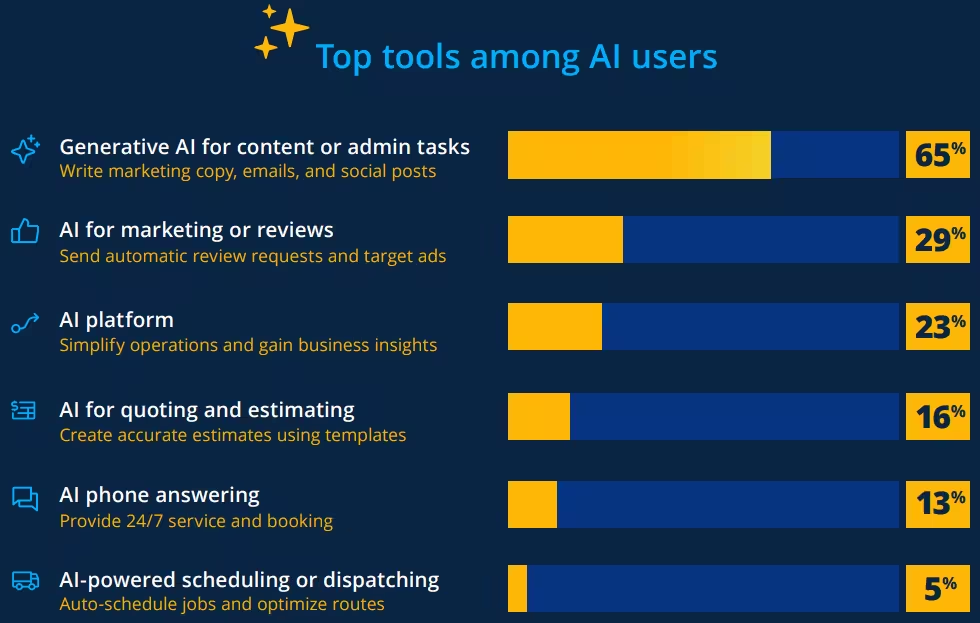
But more companies are now beginning to use AI to either complement or entirely replace service field software tools as well.
More importantly, AI allows contractors to adapt their field service tools to their trade specifically. This matters because industries like masonry, plumbing, HVAC, electrical, landscaping, or roofing all have different operational needs.
When it comes to handyman services specifically, contractors typically use AI for things like more accurate damage estimates, faster price quotes, and even during the planning phase to organize the crew and prepare the repair job.
Some contractors have even found niche use cases for their businesses, which standard field service software can’t provide.
[CTA_INSERT]
Examples of Real Use Cases for AI – How One Handyman Contractor Found Novel Uses for AI
Tim Leary, founder of Handy’s, a residential handyman company based out of Westfield, New Jersey, found novel ways to implement AI into his business’s workflow.
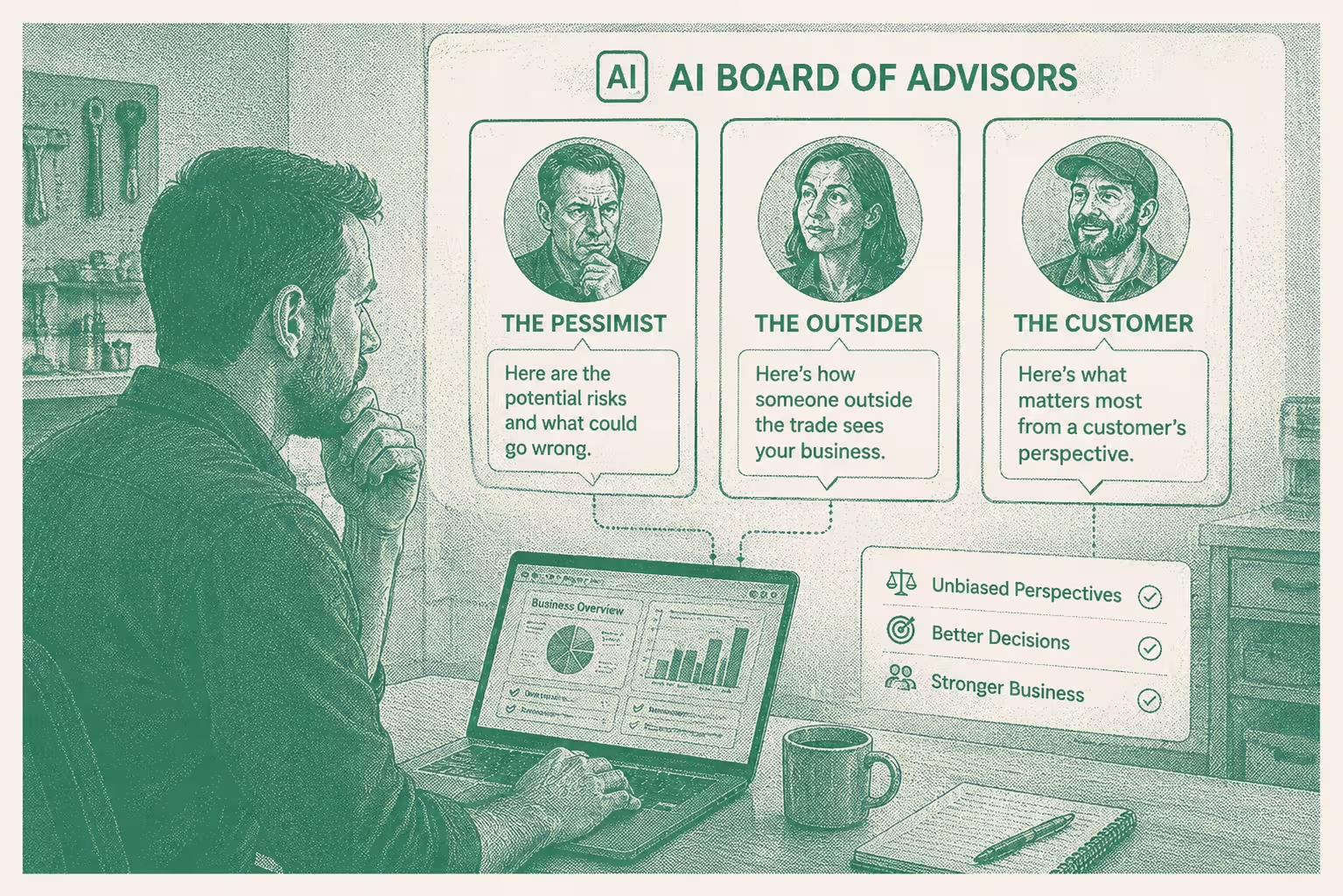
The most impactful was the creation of an AI board of advisors, which would help inform his decision-making. The reason behind the project was that, in order to make unbiased, objective decisions for his company, Tim had to be able to put himself in other people’s shoes to truly understand how those decisions would fare.
So, he created an AI board that mimics real-life human personalities (a pessimist, someone unrelated to the handyman trade, and a business customer). These AI board advisors would analyze the business from their own perspectives, which helped Tim understand how his internal decisions would appear to different people.
Another problem Tim was trying to solve was accurate service pricing, allowing for better and faster cost estimates. The issue was that handyman jobs are by nature very complex, often involving numerous services, tools, and equipment. This makes it difficult to keep track of all the costs associated with each job.
So, Tim built an AI estimator, fed it all of the materials, operations, tools, and equipment his business is using and trained his crew on how to operate it. This allowed technicians to create cost estimates for clients on the spot, saving a lot of time and work in the process.
And Tim’s story is not singular. Many other blue-collar trades have started integrating AI into their services, from industries like pipefitting, to garage door services, audio-video services, and chimney repair.
What AI Has Over Standard Field Service Software
While standard field service software tools are necessary for any business, regardless of trade or size, they do have their limitations. The most glaring problem is their design. These tools are tailored to the trade, rather than each business in particular.
This is a problem because businesses often face unique hurdles, even despite belonging to the same trade, depending on their size, geographical location, local clientele, and many other factors.
One handyman company may need a job planning software that would track ongoing jobs, available technicians, job details, costs, and material usage. Another, like Handy’s, may need a personalized cost estimator instead.
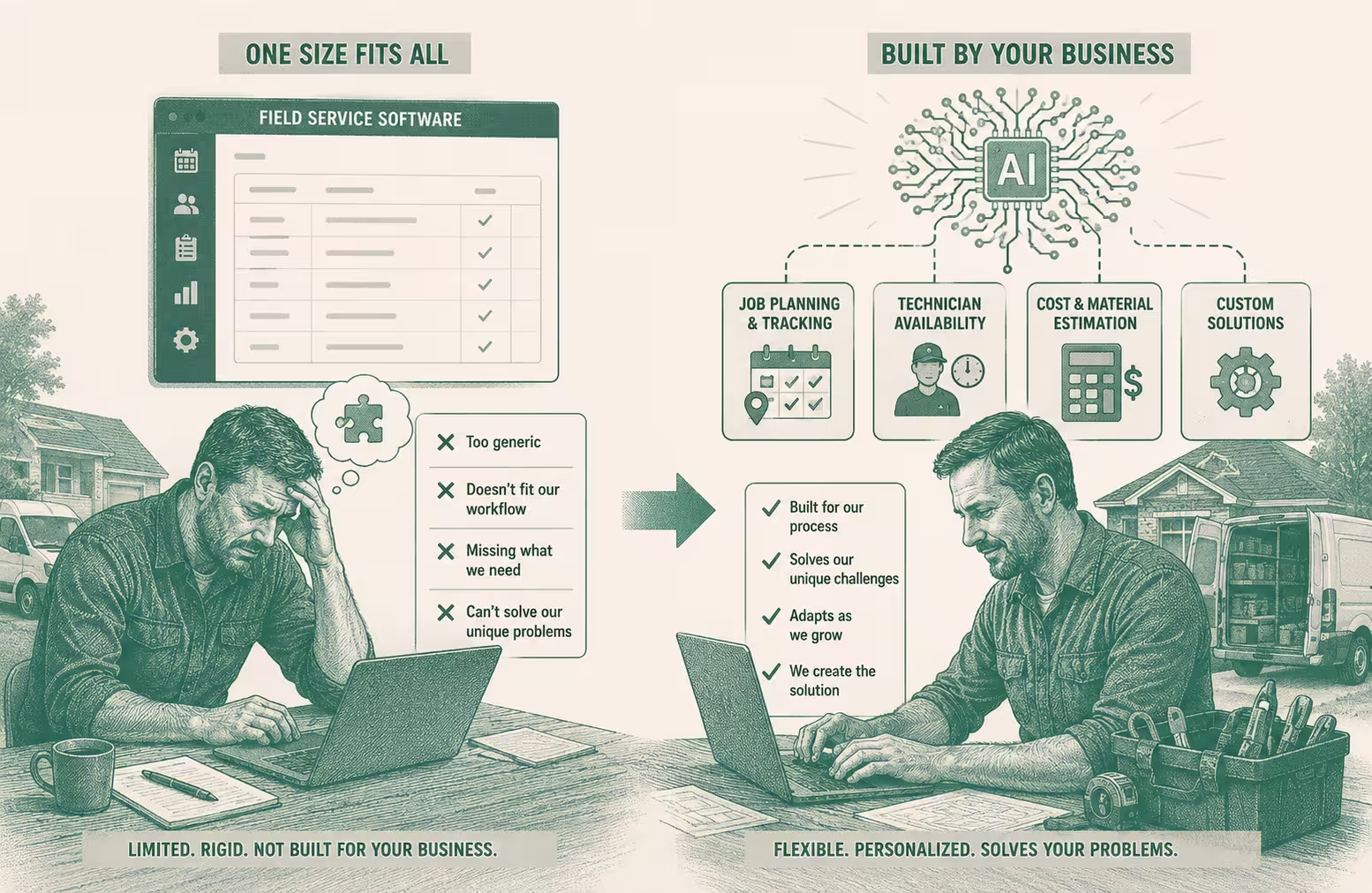
Standard field service tools can’t account for any possible problem that businesses may face at some point. This is where AI takes the spotlight, because contractors can use AI to produce their own solutions to their problems, rather than wait for standard software providers to create the solution for them.
How Dalton Mills Empowers Contractors to Create Their Own Field Service Software
Dalton Mills prioritizes customisability and accessibility above all else. Our AI-powered platform allows contractors to build their own AI-driven CRM and field service tools and tailor them to their operations.
Whether you need an AI agent to manage the customer department, a field cost estimator that produces cost reports in seconds, or a piece of software that would address problems unique to your business, you can now build them yourself.
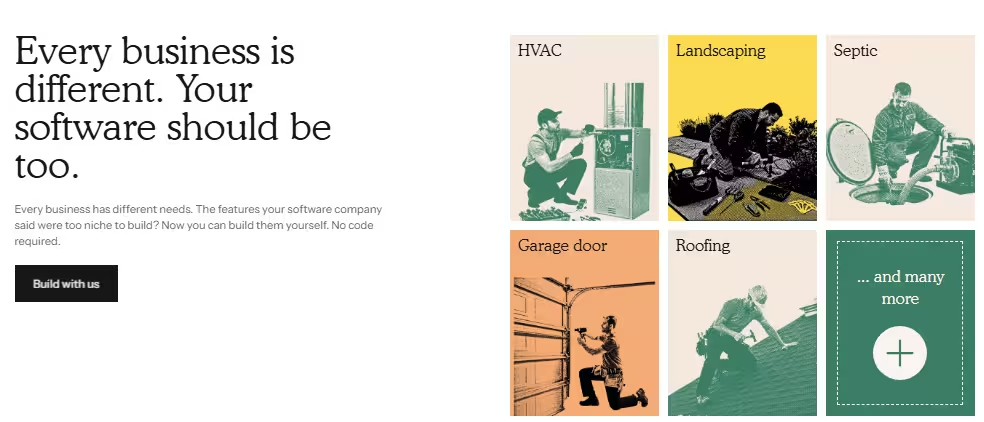
More importantly, the process of creating your own service software no longer requires coding knowledge or extensive software engineering experience; the AI will handle everything.
The system functions based on normal conversations with the AI model. You tell the AI what you need or what your problem is and the AI will offer solutions and create the software you need based on your instructions.
If this sounds like something your business could use, apply for early access on the official Dalton Mills page and you’ll get access to our entire AI toolset to test.
Build the tools your trade needs.
Dalton Mills gives people in the trades the opportunity to create custom workflows and software tools without any prior technical experience.
Apply For Early AccessRead next

How Much to Charge for Roofing Jobs in 2026
Industry data today shows that the average roofing business racks in a net profit of around 2.8%, which means around half of them are making less than that.
October 6, 2026

How Google Ads Work for Plumbing Businesses
Plumbers can and should use a variety of marketing strategies to increase their clientele and gain more market visibility.
October 5, 2026

How to Price Window Cleaning Services in 2026
A piece of industry data shows that around 64% of window cleaning services earn under $100K annually.
October 4, 2026