July 1, 2026
How AI Helps Property Maintenance Businesses Increase Lead Conversion
Lack of scalability is the no. 1 killer for small and medium-sized companies and the main reason why most of them don’t survive their first year.

Lack of scalability is the no. 1 killer for small and medium-sized companies and the main reason why most of them don’t survive their first year.
While healthy scalability is fueled by many factors (good quality of work, fair service pricing, good customer support, a balanced cashflow, etc.), there’s one that matters more than anything: increasing lead conversion. More clients means more work, more money, and increased market visibility, which is where growth comes from.
This puts most businesses in a difficult position because, while CRM tools and field service software can manage most business operations, they can’t increase sales conversion.
But AI can.
Why Property Maintenance Businesses Use AI to Boost Lead Conversion
Researching the market for leads, creating proposals, cold-calling and cold-emailing – all these take time that could be spent on actual operational work instead. The problem is that there’s no dedicated tool that can take over these administrative tasks.
This explains why an increasingly higher number of blue-collar contractors resort to AI for those services. AI is exceedingly effective at handling administrative tasks and helping business owners save time and obtain better and faster results.
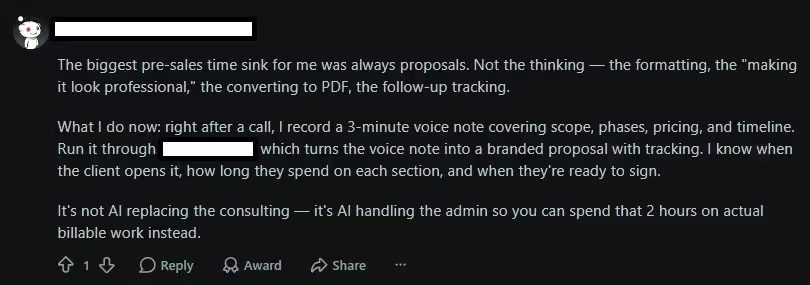
The biggest selling point is AI’s multi-functionality. AI models today can do a lot of things at once: edit voice files, suggest better proposal layouts, send personalized cold-emails, track local and national potential lead distribution, create faster and better proposals and quotes, etc.
All these help contractors save time on their administrative work and create more effective marketing strategies, which ultimately translates into a busier booking spreadsheet.
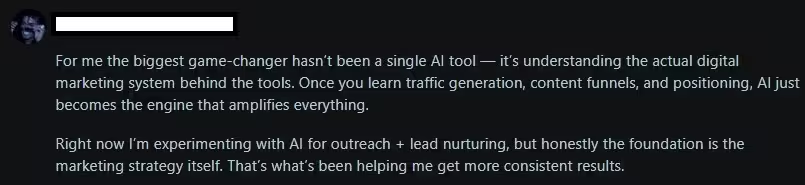
More importantly, AI works for all jobs within the property maintenance trade, including services like appliance repair, alarm systems, roofing, HVAC, plumbing, and electrical.
[CTA_INSERT]
Real Use Cases for AI – From AI Quoting Platforms in Landscaping to AI Cold Sale Strategies in Masonry
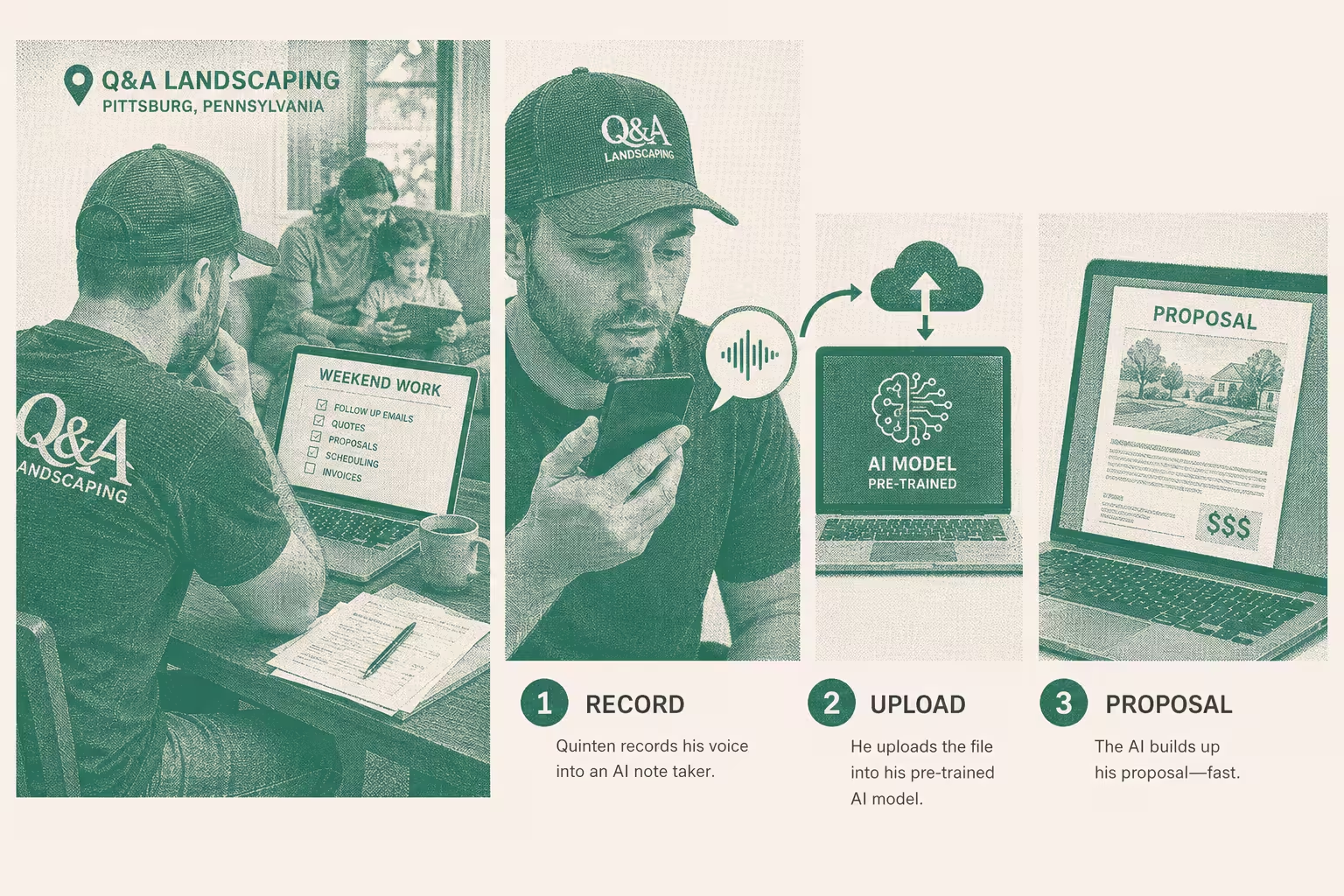
First we have the case of Quinten O’Dea, the founder of Q&A Landscaping, located in Pittsburg, Pennsylvania, who built his own AI voice quoting platform to free up his weekends. Quinten’s problem was that his business’s administrative work was spilling over into the weekend, which ate away at his family time.
So, he created an AI quoting tool to speed up the process. He now simply records his voice into an AI note taker, then uploads the file into his pre-trained AI model who then builds up his proposal.
Next is the case of Zac O’Hara, the masonry expert who ended up automating his entire sales follow-up process with AI. His brainchild, “Mason”, is a personalized AI agent that can handle his entire lead conversion process from scratch, as Zac himself explained:
“I can text a picture of a business card, it (the AI) goes and research the top 3 in the company, starts a cold email campaign, a nurture sequence, and gives us some nice outreach to property management companies.”
This automated AI system helped him save a lot of time with his marketing strategies and find more effective ways of reaching his target clientele base.
These two use cases highlight the true potential of AI and why blue-collar contractors have now started integrating AI tools across most of their operations. We see the same trend across the board, including in businesses like pipefitting, alarm systems, water treatment, and irrigation.
The Limitations of CRM and How AI Solves the Problem
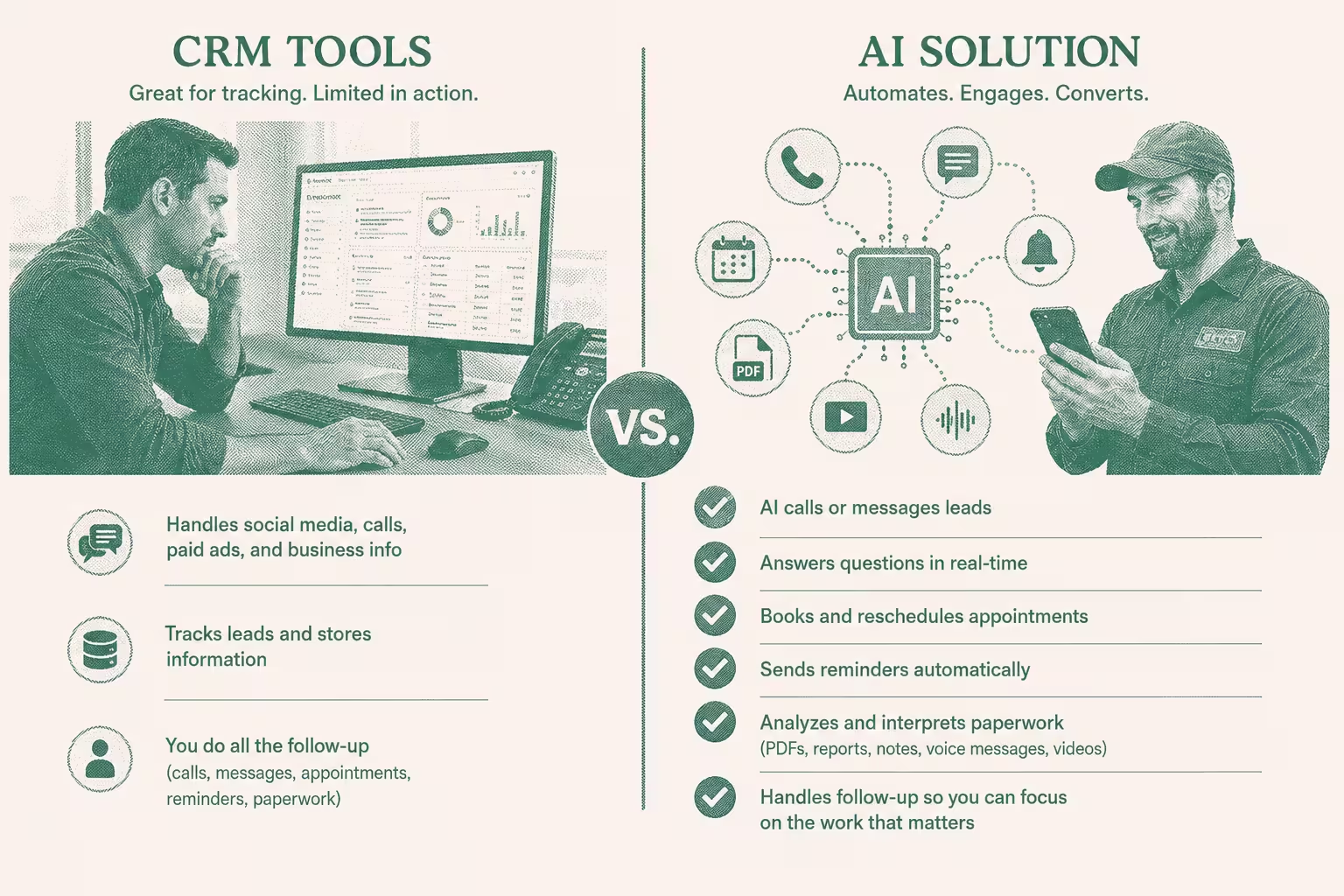
CRM tools are the standard when it comes to sales conversion and lead hunting, but they do have their limitations. The problem is that CRM software tools tend to be very inflexible.
They can handle aspects like social media, phone calls, paid advertising, and track business information for later use, but the contractor is the one doing all the follow-up work.
AI solves this problem by automating much of the lead conversion process. Unlike CRM software, AI also calls or messages the lead, answers questions, books and reschedules appointments, sets reminders, analyzes and interprets customer paperwork (PDF files, reports, notes, voice messages, videos), and much more.
AI is also very good at adapting to the user’s needs. Quinten and Zac operate in different trades, landscaping and masonry, and came up with different uses for AI, tailored to their unique needs.
This type of flexibility is precisely why AI started gaining ground in the blue-collar ecosystem over the past several years, with almost 40% of businesses now using AI tools regularly.
How Property Maintenance Businesses Can Use Dalton Mills to Increase Lead Conversion
Dalton Mills harnesses the power of AI to give contractors faster and more effective lead conversion solutions. We’ve already established that CRM tools are limited in what they can do and still require a lot of human input as part of the process.
With Dalton Mills, property maintenance businesses can now create their own CRM tools, completely personalized and adapted to their specific needs. This allows contractors to create AI-powered CRM software that handles the entire lead conversion process from start to finish, similar to how Zac O’Hara’s “Mason” AI agent operates.
No coding necessary – the AI will handle everything on the software engineering part.
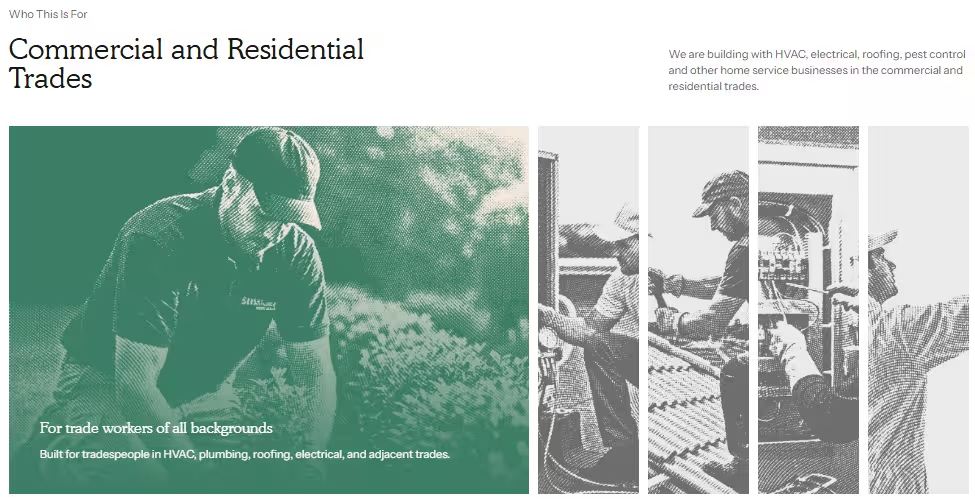
Plus, AI can suggest ideas on how to increase sales conversion based on how your business operates, the available leads in the area, and numerous other factors that may be unique to your business specifically.
You can join Dalton Mills today by applying for early access on the official page.
Build the tools your trade needs.
Dalton Mills gives people in the trades the opportunity to create custom workflows and software tools without any prior technical experience.
Apply For Early AccessRead next

How Much to Charge for Roofing Jobs in 2026
Industry data today shows that the average roofing business racks in a net profit of around 2.8%, which means around half of them are making less than that.
October 6, 2026

How Google Ads Work for Plumbing Businesses
Plumbers can and should use a variety of marketing strategies to increase their clientele and gain more market visibility.
October 5, 2026

How to Price Window Cleaning Services in 2026
A piece of industry data shows that around 64% of window cleaning services earn under $100K annually.
October 4, 2026